Country guitar has two jobs: keeping a band moving with clean rhythm parts, and answering the singer with short, bright lead lines. Both are built on open chords and the major scale, so the first country songs come quickly.
Rhythm: boom-chuck and bass walks
The core country rhythm is the boom-chuck: pick the chord's root on a low string (boom), strum the higher strings (chuck), then pick another bass note, usually the fifth, and strum again. Bass walks link the chords: going from G to C, the bass steps G–A–B–C on the beats before the change. With G, C, D and Em and these two moves, a large part of classic and modern country is playable on an acoustic guitar.
Lead: hybrid picking and double stops
- Hybrid picking: a pick held between thumb and index finger, with the middle and ring fingers plucking higher strings, so bass notes and melody sound together.
- Chicken picking: notes muted by the fretting hand and snapped by the fingers, giving the clucking, percussive sound of country electric guitar.
- Double stops: two notes at once, often a third or sixth apart, slid into place.
- Bends: country players bend one string while holding a note on another, imitating a pedal steel.
- Major pentatonic: the five-note scale behind most country solos; the pentatonic scale tool shows it for any key.
Gear and tone
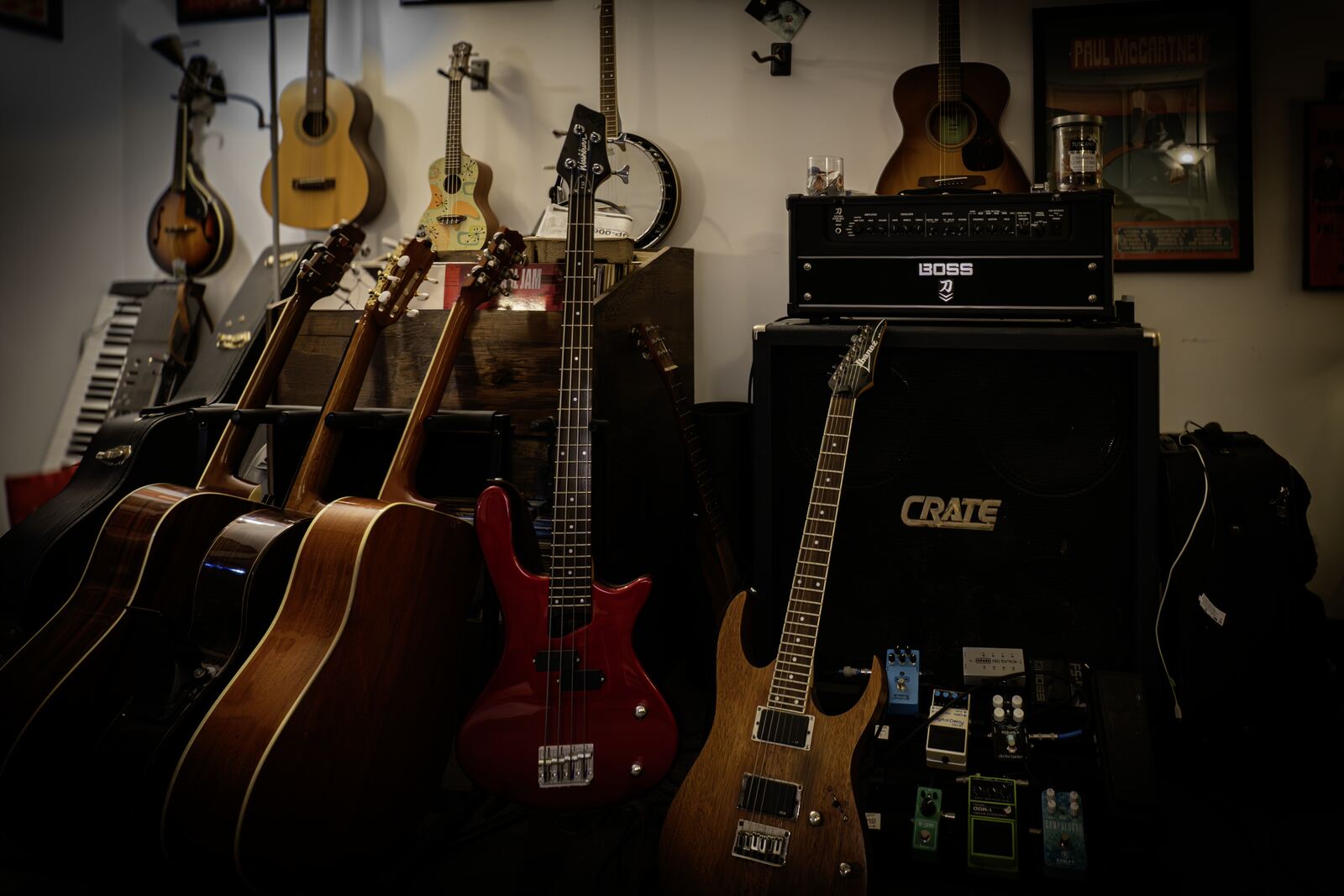
A bright single-coil electric guitar, a clean amp and a little compression give the classic country sound; an acoustic dreadnought covers the rhythm side. Capos are everywhere in country, because they keep open-chord voicings in any key the singer needs.
Numbers instead of chord names
Country session players often write songs in the Nashville number system: chords as scale degrees (1, 4, 5, 6m) instead of letter names, so a chart works in any key. It takes an afternoon to learn and makes transposing for a singer automatic.
How lessons approach country
Bill writes out each song you bring, rhythm part first, and adds the fills and solos once the timing settles. He plays the other guitar part with you, the way two guitars share a country band. For more on the acoustic side, see folk and acoustic lessons.
Questions
Should I learn country on acoustic or electric guitar?
Start on whichever matches the songs you want. Rhythm country lives on the acoustic; the twangy lead sound needs an electric. The chords and the boom-chuck are the same on both.
What is the difference between country and bluegrass guitar?
Bluegrass is acoustic, fast and flatpicked, with banjo, mandolin and fiddle in the band. Country uses drums and electric instruments and leans on the song and the singer.


